
Thanksgiving is more than a time to celebrate gratitude, family, and togetherness. It is also an opportunity to reflect on your financial progress, review your goals, and prepare for a stronger financial future.
As the year comes to a close, individuals and small business owners can use this season to evaluate their finances, organize their records, and make informed decisions for the year ahead.
Whether you are managing household expenses, running a growing business, or planning for retirement, taking a little time to review your financial situation can make a meaningful difference.
At Amazing Financial Solutions, we believe that financial wellness begins with clarity, preparation, and informed decision-making. This Thanksgiving, here are five practical ways to practice financial gratitude while building a stronger financial foundation.
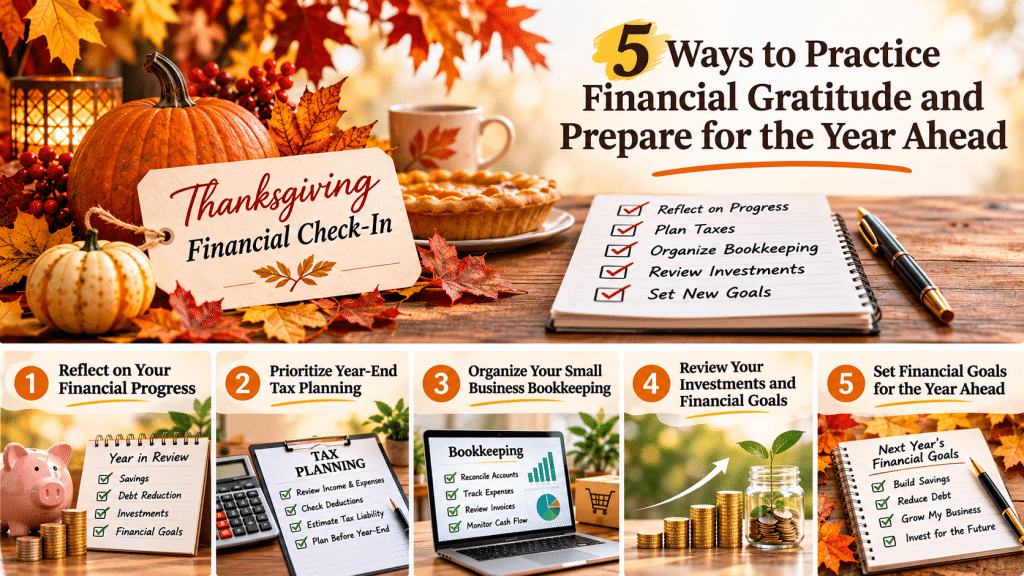
1. Reflect on Your Financial Progress
Before setting new financial goals, take a moment to appreciate how far you have come.
Financial progress looks different for everyone. Perhaps you have reduced your debt, increased your savings, improved your business revenue, or started investing for retirement. Every positive step contributes to your long-term financial well-being.
Start by reviewing your financial position:
Evaluate your savings and emergency fund.
Review outstanding debts and repayment progress.
Check your investment and retirement contributions.
Analyze your monthly spending habits.
Measure your progress toward personal financial goals.
For small business owners, this is also an excellent opportunity to evaluate annual revenue, profitability, operating expenses, and cash flow.
Understanding your financial progress helps you identify opportunities for improvement and establish realistic goals for the coming year.
2. Prioritize Year-End Tax Planning
One of the most important financial activities before the end of the year is reviewing your tax situation.
Many individuals and business owners wait until tax season to organize their financial records. However, effective tax planning should happen throughout the year.
A proactive year-end tax review can help you understand potential tax obligations, evaluate available deductions, and prepare the necessary documentation.
Small business owners should consider:
Reviewing annual income and business expenses.
Organizing receipts, invoices, and financial statements.
Checking eligible business deductions.
Reviewing estimated tax payments.
Evaluating retirement plan contributions.
Discussing potential tax-saving strategies with a qualified tax professional.
For individuals, reviewing charitable contributions, retirement savings, and investment activity may also be beneficial.
Business owners in Hawaii should pay attention to applicable federal and Hawaii state tax requirements when preparing for the upcoming tax season.
The earlier you plan, the better prepared you can be. Working with a professional tax advisor can help you understand your financial position and make informed tax-related decisions.
3. Organize Your Small Business Bookkeeping
Running a small business requires balancing multiple responsibilities, from serving customers to managing employees and growing revenue. Unfortunately, bookkeeping can sometimes take a back seat.
Thanksgiving is a great reminder to give your business finances the attention they deserve.
Accurate bookkeeping provides a clear picture of your company’s financial health and helps you make better business decisions.
Before the year ends, make sure you:
Reconcile business bank and credit card accounts.
Review outstanding invoices and customer payments.
Categorize income and business expenses.
Organize receipts and financial documents.
Review profit and loss statements.
Monitor business cash flow.
Identify unusual transactions or discrepancies.
For Shopify and e-commerce businesses, it is particularly important to track sales, refunds, transaction fees, inventory costs, and operating expenses accurately.
Keeping your financial records organized throughout the year can simplify tax preparation, improve financial reporting, and help you identify opportunities to increase profitability.
If bookkeeping has become overwhelming, professional bookkeeping services can help you maintain accurate records and focus more of your time on running your business.
4. Review Your Investments and Financial Goals
Thanksgiving is also an opportunity to look beyond immediate financial responsibilities and think about your long-term future.
Are your current financial decisions helping you achieve the lifestyle you want?
Whether you are saving for retirement, building wealth, or preparing for major life milestones, having a structured financial plan can help you stay focused.
Consider reviewing:
Your retirement savings and investment contributions.
Your investment portfolio allocation.
Your emergency savings.
Your financial goals and time horizon.
Your overall investment risk exposure.
Your progress toward long-term financial milestones.
Business owners should also consider how business profits contribute to their personal financial goals.
Building wealth requires more than simply earning money. It involves making thoughtful decisions about saving, investing, managing risk, and planning for the future.
Working with a financial professional can help you develop a strategy that aligns with your circumstances, priorities, and long-term objectives.
5. Set Financial Goals for the Year Ahead
As Thanksgiving approaches, the end of the year provides an ideal opportunity to establish clear financial priorities for the next one.
Instead of making general financial resolutions, focus on specific and measurable goals.
For individuals and families:
Build or strengthen an emergency fund.
Reduce high-interest debt.
Increase retirement contributions.
Establish a consistent monthly savings plan.
Review investment strategies.
Improve budgeting and spending habits.
For small business owners:
Establish realistic revenue and profitability targets.
Maintain consistent monthly bookkeeping.
Improve cash flow management.
Review operating expenses.
Develop a tax planning calendar.
Identify opportunities to improve business efficiency.
The key is to create financial goals that are realistic, measurable, and aligned with your priorities.
Small, consistent improvements can lead to meaningful progress over time.
Make Financial Gratitude Part of Your Thanksgiving Tradition
Thanksgiving reminds us to appreciate what we have while looking forward to what is possible.
Financial wellness is an important part of that journey. Having organized finances, a clear plan, and a better understanding of your financial position can reduce uncertainty and help you focus on what matters most.
Whether you are an individual planning for retirement, a family working toward financial stability, or a small business owner preparing for another year of growth, this season is a valuable opportunity to take a closer look at your financial future.
At Amazing Financial Solutions, we are committed to helping individuals and small business owners make informed financial decisions through professional bookkeeping, accounting, tax preparation, proactive tax planning, financial planning, and investment management services.
This Thanksgiving, take a moment to celebrate your progress, organize your finances, and prepare for the opportunities ahead.
Wishing you and your family a wonderful Thanksgiving filled with gratitude, happiness, and financial confidence!
Frequently Asked Questions About Thanksgiving Financial Planning
Why is Thanksgiving a good time to review your finances?
Thanksgiving takes place near the end of the calendar year, making it a convenient time to review savings, investments, spending habits, business performance, and upcoming tax obligations.
What should small business owners do before the end of the year?
Small business owners should reconcile financial accounts, organize bookkeeping records, review revenue and expenses, monitor cash flow, and discuss potential tax planning opportunities with a qualified professional.
Why is year-end tax planning important?
Year-end tax planning helps individuals and businesses review their financial activity, prepare documentation, understand potential tax obligations, and evaluate applicable tax strategies before the year closes.
How can professional bookkeeping services help a small business?
Professional bookkeeping helps businesses maintain accurate financial records, monitor cash flow, understand profitability, prepare for tax season, and make informed operational decisions.
When should I start planning my finances for the next year?
Ideally, start reviewing your financial goals before the current year ends. This gives you time to evaluate your financial position, identify priorities, and establish a practical plan for the upcoming year.
Plan Your Financial Future with Amazing Financial Solutions
A financially confident future starts with informed decisions today.
Whether you need help organizing your business finances, preparing for tax season, or developing a long-term financial strategy, Amazing Financial Solutions is here to help.
Explore our financial services and take the next step toward greater financial clarity.
Visit Amazing Financial Solutions to learn more or get in touch with our team.